
I Tried to Protect My Daughter from My Insecurities. It Wasn’t Enough.
On the terrifying reality of raising a child in a culture that profits from our self-loathing—and how we reclaim our brilliance together.
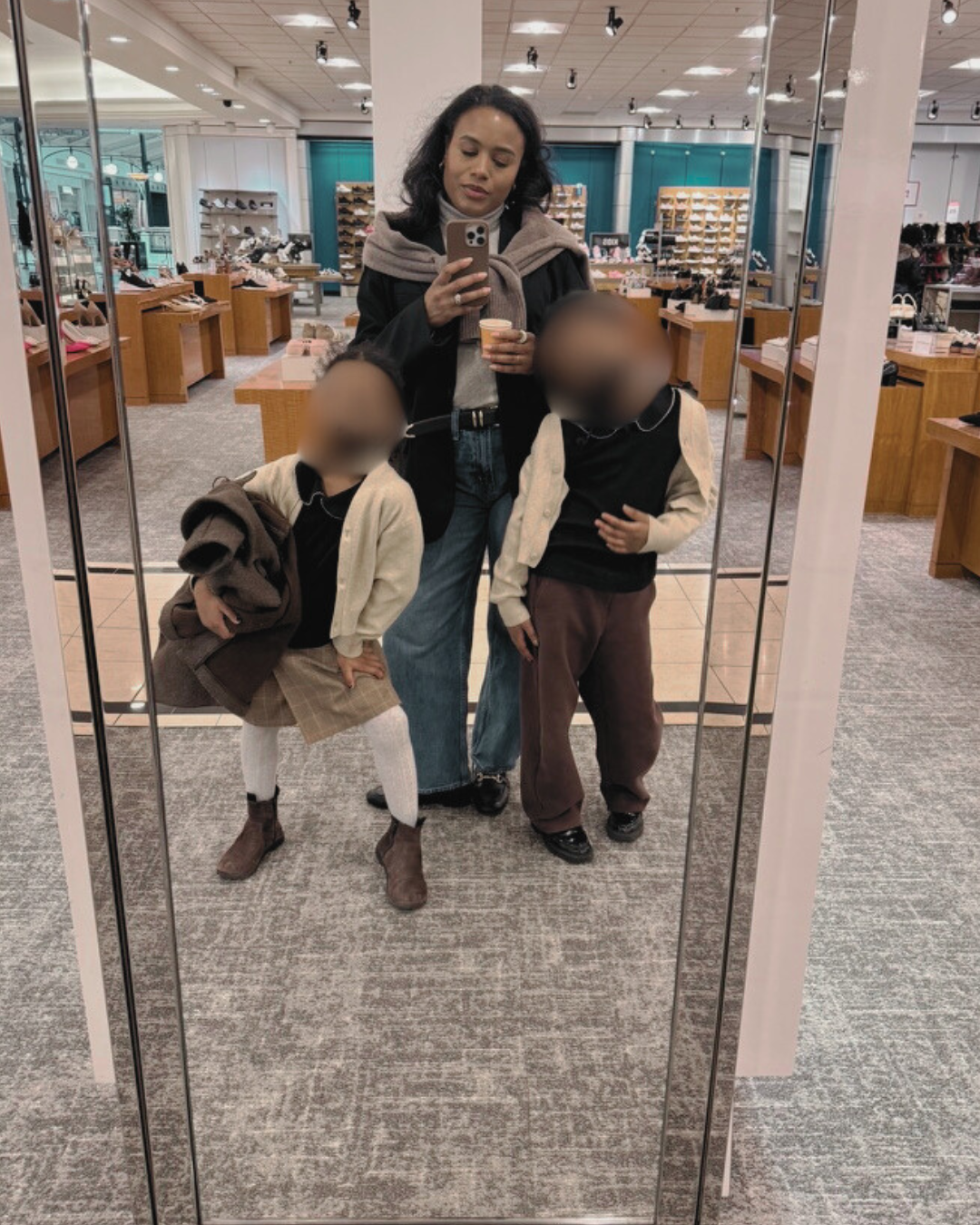
There is something I must admit.
Something that has been weighing on my heart.
Something that I…fear I may have passed on to my daughter. Something negative. Like, maybe I’m not breaking generational patterns after all. And I’m fearful that it’s too late to rectify this.
See, I’ve never been able to see myself in much of a positive light. I’ve never felt brilliant, beautiful, gifted, or talented. I’ve never felt like I had that…special something that other exceptional people have. You know—the people who just ooze beauty, grace, and radiance? Or, those people whose genius seems to echo through a room the moment they walk in it?
I’ve always longed to not only feel remarkably confident, but to feel like I was placed on this earth for something extraordinary. But, no matter how much I’ve gaslit myself into believing I was extraordinary with endless co-curricular activities, advanced classes, and the perfectly polished outfit, I’ve always felt substandard. And the more I tried to fake my confidence, the more my actual confidence took a downward spiral. Every glimpse in the mirror mustn’t turn into a prolonged stare, otherwise I will be forced to confront my reality: I still don’t love myself.
Hell, I don’t even like myself.
The essay originally published on Substack.
Real healing requires the kind of raw honesty that a society built on hierarchies tries to silence. If you value this level of vulnerability and want to support the work of reclaiming our inherent worth, please consider to a paid Substack subscription.
And this is something I fear I may have passed on to my eldest daughter. I’m not sure how. I try not to negate myself in her presence. Even on the days when my confidence is literally in the toilet, I pay careful attention to how I show love for myself and the effort I bring to my day so I can model as much resilience as possible. Above all, I encourage her to make mistakes often. We homeschool, and I advise that she is free to make mistakes here. There is no comparison. There are no grades. She has nothing to be afraid of.
Every glimpse in the mirror mustn’t turn into a prolonged stare, otherwise I will be forced to confront my reality: I still don’t love myself.
We’ve practiced affirmations on both good and bad days. I'm doing everything I can to try to prevent her from turning into who I was as a teenager, which is my biggest fear. As a teenager, I was deeply depressed, felt extreme self-loathing, and often wondered what the purpose of my existence was. My hope in having daughters was to prove that girl teenage-hood didn't have to look that way, and I would do everything in my power to prove otherwise. My daughters as teenagers would love themselves and see their brilliance and talent as nothing short of amazing. They would look at themselves in the mirror and revel at the creation that is them.
Yet, at just the tender age of 9, my daughter has started to put herself down when she makes mistakes. She sometimes self-deprecates when she is corrected. And the perfectionistic tendencies are creeping in.
Have I inadvertently passed my internal self-loathing onto her? Is this an inevitable part of raising a child the same gender as you—passing your insecurities and unhealed wounds onto them? Or, is this an inevitable part of living in a society that profits from our self-loathing so it encourages and magnifies it from every corner?
Most importantly, am I fool for believing I could ensure my daughter always saw her own brilliance when I’ve never been able to see my own?
Are we fools for believing we can put an end to the self-loathing cycles of future generations when our society cannot function without profiting from the insecurities it fabricates into our being?
As much as I’d love to believe that my self-esteem challenges were unique to me, they were not. Most of us have wrestled with some form of self-doubt because we are conditioned to believe we are flaws, or projects, in need of constant fixing. This is deeply embedded into our society and culture—a seed that was planted from the earliest days of colonization and the creation of a human hierarchy based on the supremacy of whiteness.
Our society does not profit from us loving ourselves. Our society does not profit if we can look in the mirror and see true beauty, brilliance, and whole humans who are not in need of fixing, but simply worthy for existing. There cannot be a profit if there is no standard-based hierarchy to measure ourselves against. Not only can there not be a profit, but there is no way for those in positions of power to maintain their power if a hierarchy no longer exists. A hierarchy can only exist if there is full belief that some humans are more worthy, or more valuable, than others.
So, perhaps it was inevitable that, no matter how hard I’ve tried to protect my daughter from low self-esteem, it would eventually catch up to her? Especially if, at 36, I’ve been unable to crack the miraculous confidence code in myself.
To this day, I cannot see true goodness in myself. I try. I really do. I continue to cosplay as someone who believes they are a brilliant, credentialed thinker. I curate a version of myself online that makes it look like I never question the purpose, qualifications, and worth behind the work that I do or the life that I live. I wear outfits that scream, “confidence is my middle name.” I put on a full face of makeup because it makes me feel like a version of myself I wish existed in truth. I brainstorm ideas that never come to fruition because the true confidence needed to carry those ideas out is nothing but mere wish.
Our society does not profit if we can look in the mirror and see true beauty, brilliance, and whole humans who are not in need of fixing, but simply worthy for existing.
How am I even qualified to write this essay? To ask for paid support? To create programs, resources, and curriculum to help others liberate themselves from this culture that has convinced so many of us that chasing standards of whiteness is the only way to feel worthy when I’m still fighting this very battle? When I haven’t even been able to make sure my own daughter can see her brilliance?
I can’t see my brilliance, but I’m trusting it exists (and you can, too)
I just finished a 6-week group coaching/therapy program, and if you know me, this is something I don’t normally do. Invest in my growth? Spend money on myself that’s higher than like, $50? Nah. Not worth it. But, I happened to be in a desperate state of depression when this opportunity fell into my lap and I knew I needed to do something different. So, I invested.
Toward the end of our time together, one of my fellow cohort members said something to me that I haven’t been able to let go of since hearing it:
“Caroline, you are so brilliant. You just can’t see it, yet.”
Me? Brilliant?
I immediately felt a rush of emotions. My inner child began poking her head out, eager to share why the adult version of us has never felt anything substantial, let alone brilliant.
Me? Brilliant?
I’ve been striving toward brilliance since I can remember. I never thought I’d actually arrive.
But, I’m learning that brilliance is not a destination awaiting our arrival. It is innate in all of us. Society, culture, and generational conditioning do everything possible to strip us of our ability to not only see our inherent brilliance, but trust it.
Resistance and liberation happens when you trust that your brilliance and your worth exist, even when you can’t feel it or see it.
This is me trusting that it exists. I could lie to you all and act like I have 100% confidence and belief in everything I do and offer. But, I don’t. I’m learning just as much as my readers and community members are, and that’s the beauty of this work. We get to be on this liberation journey together, as liberation is also not a destination, but a continuous journey that requires practice. Especially when you live within an oppressive system that exists to separate us from the liberation that is rightfully ours.
I claim my liberation with every word I write, and every draft I hit ‘publish’ on. I claim my liberation when I trust the brilliance within me and stop letting the feelings of imposter syndrome stop me from doing the work I’m most passionate about.
That is what this space is for. Trusting, remembering, and reclaiming what is rightfully ours—what is innately within us that society has tried to steal.
The essay originally published on Substack.
This space is dedicated to the ongoing practice of liberation—a journey that is much easier to walk when we walk it together. By becoming a paid subscriber, you directly fuel the creation of resources and reflections that help us all remember our innate brilliance.
Our Inner Child Was Caught in the Crossfire
Remember when I said that when my cohort peer told me I couldn’t see my own brilliance my inner child wanted to pop out and share a word or two? I don’t want to negate the importance of that. Just for a moment. Even though my focus is largely on societal and cultural influences, I would be remiss if I didn’t acknowledge our hurt inner children who were caught in the crossfire of society, culture, and familial pressure that was typically the result of the first two.
Many of us were not told by our parents that we were brilliant. Many of us felt that our parents worked overtime to criticize us, amply our faults, and downplay our positives. Many of our parents believed in the concepts of tough love, no-excuse discipline, and finding fault in developmentally appropriate emotions and behaviors. However, we usually stop there when we consider the effects of our childhood on our mental health status today. We don’t typically stop to consider the grave impacts of institutionalized white supremacy and racism on our parents, and how their coping mechanism for the same trauma we endure was to parent us in such a way that they believed was preparing us for an unkind, inhumane world.
Why overly hype up your child just for them to enter the world and fall flat on their face? If you utilize harsh discipline and “tough love,” at least you can ensure that they will be prepared for the reality of the world, right? Their parenting styles were a direct reflection of the intersectionality of oppression they faced, whether that be racism, classism, sexism, ableism, or a combination. It doesn’t make it right, but it does provide context, understanding, and a bit of freedom. Just as we are trying to navigate the throes of white supremacy in real time, so were our parents and/or guardians. And our inner children caught much of the fallout in the process.
Just as my child is catching a bit of my fallout as I work through my own wrestling with white supremacy culture. Maybe your children, if you have them, are too.
And if that is the case, I need you to know that it’s okay. Because awareness exists now. An active choice to liberate ourselves exists now. We are the generation that is doing the work that our parents and grandparents weren't able to do because much of their work was based in systemic injustice and survival. When survival is all you can think about, there is no room in your nervous system for emotional and mental liberation.
And while we are facing a fresh revival of systemic white supremacy through a fascist government that makes almost every decision based on the Great Replacement Theory, we have to acknowledge the fact that the survival we are fighting for today still leaves room for us to fight for a version of liberation our ancestors could only dream of. And we have their fight for survival to thank for that—just as our children will have our liberation fights to thank for a bit of ease in theirs.
When survival is all you can think about, there is no room in your nervous system for emotional and mental liberation.
Liberation Happens in Small Moments
I just finished having a talk with my daughter before tucking her into bed. I told her that I noticed language of perfectionism and how unhealthy it is to think this way. I heard her out, acknowledging where some of my frustrations with certain behavioral challenges have contributed to her feelings. Sure, I try like hell not to negate myself in front of her, but I’m a human who gets easily frustrated when things aren’t running smoothly, and she’s felt that.
I told her that everyone is perfectly imperfect, including her and including me. Our mistakes make us perfect just as much as our brilliance does. But, I’m determined for her to see that brilliance in herself. Funny enough, she sees it in me and I see it in her. My hope is that, together, we can help each other see our own brilliance.
We discussed strategies for improvement on both ends, but most importantly, we affirmed who she was created to be. Someone who’s imaginative, creative, and full of joy and life. Someone who is wicked talented beyond her years and who will touch the lives of everyone she interacts with. Someone who is brilliant.
I wish one conversation could erase systemic, cultural, and familial damage caused. If that were the case, damage would have been erased years ago. This isn’t the first time we’ve had this conversation, and that’s a generational change I’m making in this liberation fight. The conversations are happening, the repair is occurring, the reflections are frequent and impactful. That counts for something. That is liberation in real time.
Tomorrow, when I ease into her room to wake her for the day, I will whisper affirmations in her ear: you are brilliant, you are beautiful, you are wonderful as you are.
I will keep choosing liberation—trusting the brilliance in myself when I cannot see it.
And if I can do it, so can you.
It may feel like nothing is working, but we’re planting seeds.
We’re watering them.
Roots are beginning to spread beneath the surface.
And fruit will bear. In time, it will bear.
And we will be able to see our own brilliance.
If this essay resonated with you, consider becoming a paid Substack subscriber to support this work and the deeper writing I share here. In the coming weeks, I’ll also be sharing more about a new space I’m creating where we can practice this work together—learning how to trust the brilliance within us and reclaim what systems of domination have tried to take.
And if you’re ready to go deeper right now, my book We'll All Be Free: How a Culture of White Supremacy Devalues Us and How We Can Reclaim Our True Worth explores why so many of us struggle to see our own brilliance in the first place—and how understanding the systems behind that struggle can be the first step toward real liberation. You can grab your copy here.