
The America White People Are Finally Seeing
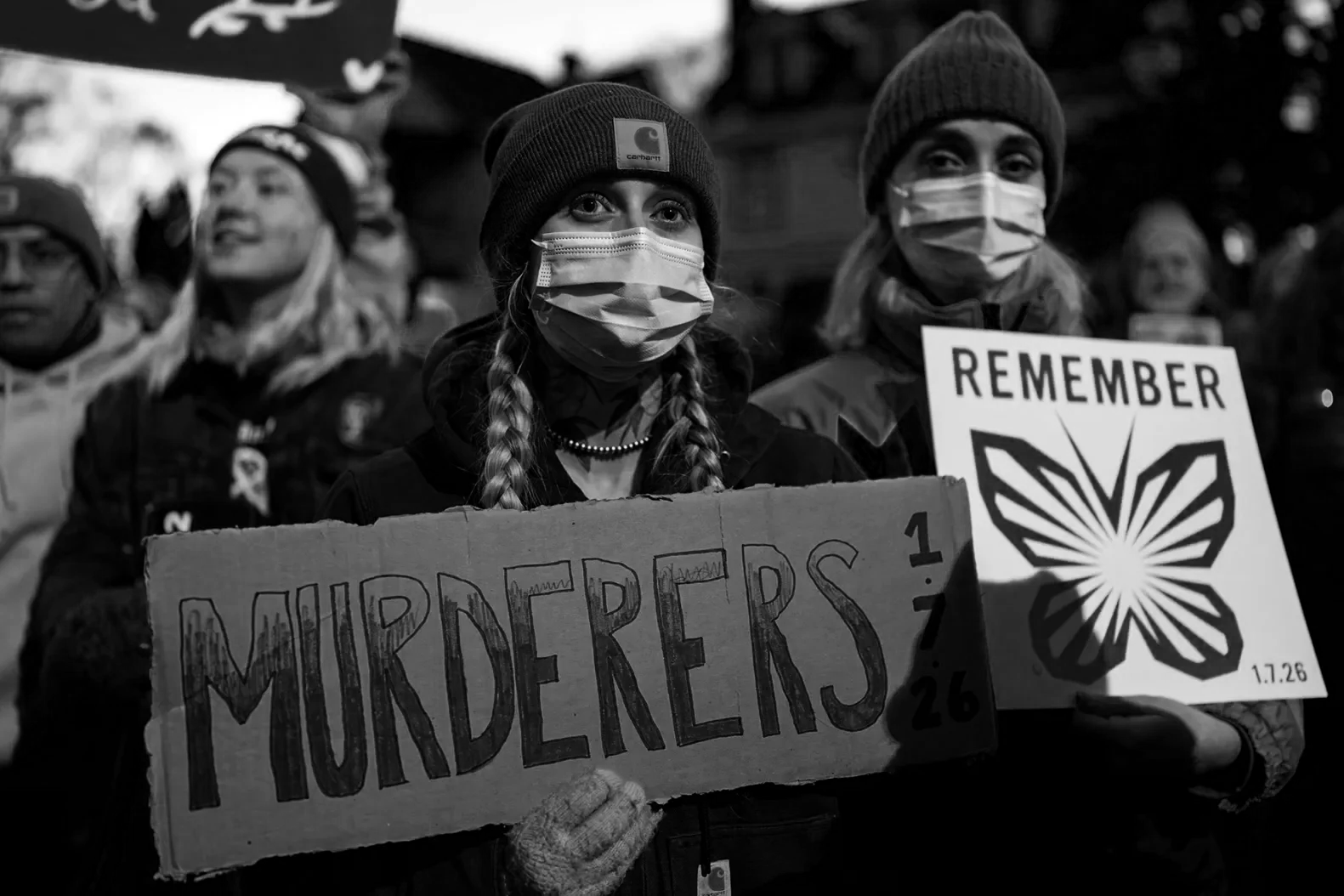
There is only one place that has ever felt like home to me, and that is the beautiful state I grew up in. Minnesota. I’m a proud Minnesotan through and through. Ask anyone who knows me in real life what my three biggest passions are and they will tell you: coffee, tennis, and Minnesota. I no longer live there, but have always dreamt of the day I would return. I think about it daily—longing for the kindness of Minnesotan neighbors, the positive energy Minnesotans carry, vibrant colors of the diversity, the skylines of both downtowns, and the crispness of the cold air. I know hometown love is nothing new—most people would say that their hometown is the best hometown—but there is no denying that there is something special about Minnesota. I think the nation is finally starting to see what we’ve known all along.
My beautiful state has experienced so much turmoil lately, as I’m sure you are aware of. There is no need to recap here, but from the murder of George Floyd, to the mass shooting at Annunciation, to the recent murder of Renee Good by ICE agents, we’ve been through so much. (Yes, I still say ‘we’ because home is home. My location is just semantics.) I’ve never seen Minneapolis on the news as much as I have in recent years. I always said I wanted Minnesota to be more well known, but not for this. However, through the tragedies, I am glad more are becoming aware that Minnesotans do not play about each other. Or human rights.
Our state is under attack because it’s progressive, almost socialist, policies are seen as a threat to the fascist regime that currently controls our federal government. Our state leads with compassion and protects human rights boldly, which is the very antithesis of our federal government’s mission to restore white supremacy back to its 1776 origins. This is why they are targeting our beautiful Somali community (among other things). This is why ICE has been sent to a city that has been minding its own business while passing state laws to counter the government’s attempts to obliterate civil rights.
While Minneapolis isn’t the first place federal agents have been deployed in ways that racially target communities, the murder of Renee Nicole Good — a 37-year-old mother of three killed by a U.S. Immigration and Customs Enforcement agent during a federal immigration operation — was one of the first widely seen eyewitness accounts of how the militarization of our federal government to uphold systems of power and white supremacy has officially harmed someone who is white.
What we witnessed on Wednesday was tragic, infuriating, and confirmation of every warning Black and brown people have been issuing for generations.
But it wasn’t surprising. At least, not to the Black and brown people who live with this America as the reality of our America. This is the America that we not only know, but have had to find a way to endure and survive for centuries. This is the America we know better than she knows herself. This is the true America—one that gaslights us for naming her, even as she proves us right again and again. This is the America that white people like to either pretend they cannot see, or believe doesn't exist because when it happens to Black and brown bodies it looks normal.
We’ve been warning white people about this America for decades, and still, they refused to listen.
“We’re being dramatic.,” they tell us.
“It’s all in our heads,” they proclaim.
“This is the America we experience because we are at fault by our own actions, not because America was designed this way.”
We shout.
We scream into the void.
We beg and plead for white America to simply wake up.
We warn white folks by saying, “Just wait. You’re next. White supremacy is coming for you, too.”
And still, white America refuses to hear us.
And then it happens.
White supremacy harms someone it was designed to protect. And it’s caught on film.
The world tunes in.
And all of a sudden, “This is not the America you know.”
All of a sudden, the outrage punches you in the gut. You’re crying the tears we’ve cried since we landed on this soil. You’re screaming the screams we’ve been screaming for generations. You’re living the nightmare that is our daily reality.
All of a sudden—
you see it now.
You feel it now.
You understand it now.
You begin to realize that this isn’t a break from American values—it’s a fulfillment of them. Fascism didn't just arrive, it’s simply expanded. It was hiding behind democracy before, waiting for its turn to emerge. It’s been primed for decades—centuries even—for this very moment. Fascism is simply the inevitable evolution of the white supremacy that has long ruled the lives of Black and brown people. It has just finally caught up with the white people it was supposed to exempt from its violence.
The outrage isn’t wrong. But, it is late.
your outrage alone will not end this
Listen. I’m glad you're mad. Not because I want anything like this to happen, but because it unfortunately takes personal proximity to finally understand the magnitude of harm caused by oppression when you’re not typically the group that experiences it. Let that gut-wrenching outrage be your guide. Don’t let this moment be fleeting. Understand that the only way white supremacy—and fascism—is dismantled is when the group that is supposed to benefit by those systems takes it down.
However, your protests in the streets is not enough to abolish these oppressive, violent, abhorrent systems. Don’t get me wrong—they’re a vital start. I’m a firm believer in exercising your right to protest. The Civil Rights Movement built its foundation on protests. However, protests alone will not abolish the system. Protests are noise-makers and movement starters—they are not system disruptors.
System disruptions happens with rebellion.
System disruption happens with refusal.
System disruption happens with redistribution.
Rebellion looks like refusing to protect violent systems with silence. (Many of us are already doing this. Protest, social media commentary, conversations in your homes and businesses—this is noise.)
Refusal looks like disrupting the comfort economy. This means walking away—and refusing to patronize—from the institutions, businesses, and organizations that are funding—or complying with—oppression. This is paramount. Most changes to civil rights in America have only come about when the economy was widely compromised through boycotts, sit ins, and other forms of protest that directly impacted the white man’s dollar.
Redistribution looks like investing in Black, brown, and indigenous institutions that have boots on the ground in dismantling white supremacy—and coming along side them to do the work. This also includes supporting mutual aid efforts on a continual basis (if financially able) and donating to immigration defense services, bail efforts, and other necessities to aid liberation efforts.
And then, there’s where my work comes in. The internal dismantling of the culture of white supremacy that resides in all of us—the culture that stems from centuries of systems and institutions that have normalized dehumanization.
This looks like refusing to see productivity as a proof of worth.(Yes, this is connected.) Productivity is often masked compliance in these systems that harm us. And we’re conditioned to view those who aren’t compliant—or productive—as unworthy. This doesn’t mean never be productive—this means a certain level, and type, of productivity has been weaponized as a marker of worthiness in society to justify harm, oppression, othering, withholding of human rights, and more. Especially since we are taught that the “superior” version of productivity is aligned with elite, white men versus different versions of productivity that may be more aligned with communities of the global majority, women, or disabled people.
White supremacy is obsessed with control, clean narratives, clear “villains” (justifications for oppression), and emotional detachment.
Rebellion is refusing to be controlled by it—and that looks like letting go of the control we’ve been conditioned to believe will make us superior in the eyes of power.
That control looks like perfectionism, urgency, and hyper productivity, and rugged individualism—all things we’ve normalized to believe we have control over our lives, when in reality, white supremacy uses our obsession with them to control us and the institutions that uphold it. This is how white supremacy convinces us to buy into it. Even when we see the harm it causes on a broader scale—like what happened in Minneapolis—we still uphold the system by adhering to its cultural characteristics.
This is where I focus my work. Because, we can’t do it all. None of us can do everything to dismantle this system, but we can all focus on 2-3 things that create real disruption. And, I wholeheartedly believe that one of the things we must focus on is that internal dismantling. Not only is it something we can all do because it’s internal, it’s the work that will allow us to approach the external work that much more equipped, prepared, and liberated. Many of us don’t realize the harm we continue to perpetuate when doing external liberation work because, internally, we are still upholding the very values we claim to be resisting.
rebellion starts now
What happened in Minneapolis was not an anomaly—it was the inevitable result of white supremacy fully realized, working as intended.
If you are white and newly awake to the violence of this country, I need you to understand this: staying human in this moment is not passive. It is a daily, intentional refusal to become the kind of person these systems require you to be. The kind who values order over people, comfort over conscience, legality over morality, and conformity over humanity.
Rebellion is both the quiet, yet radical work we must do within and the loud, in-your-face collective disruption of protesting, boycotting, and civil disobedience. Both are equally dangerous to power. Both work in tandem to tear the system down, even if we can’t see it happening yet.
And if you want to go deeper—if you want tools and guidance for doing both the internal and external work of rebellion—my book We’ll All Be Free explores exactly that. It’s about understanding how these systems shape our sense of worth, teaching us who is allowed to be human, and giving concrete ways to reclaim our power and humanity. Reclaiming freedom isn’t just about outraging against what’s wrong—it’s about practicing liberation in every choice, every relationship, every day. If you’ve read this far and felt the weight of what happened in Minneapolis, this is the work that meets that urgency with action, reflection, and hope.
Lastly, stay tuned right here at The Liberation Letters. Because this is where I will bring the work, practice, challenges, and experiences of liberation work for the every day. Some days, the essays will be educational—providing you with another nugget, tool, or insight you can use to grow in your journey. Other days, it will be reflective and personal, as I’m on this journey with you and the fight is far from easy. My hope is that this community grows with humans who are passionate about liberation for every human and will endure the messy, sometimes infuriating, but always worthwhile fight to make it happen.
This post was originally published to my Substack, The Liberation Letters. If you want to continue the conversation, go deeper into the ideas we explore here, and support the work, you can subscribe to my Substack, grab a copy of my book We’ll All Be Free, or even buy me a coffee. Every action, big or small, helps keep this work alive—and keeps us all moving toward liberation, together. Thank you.